John Blackwood
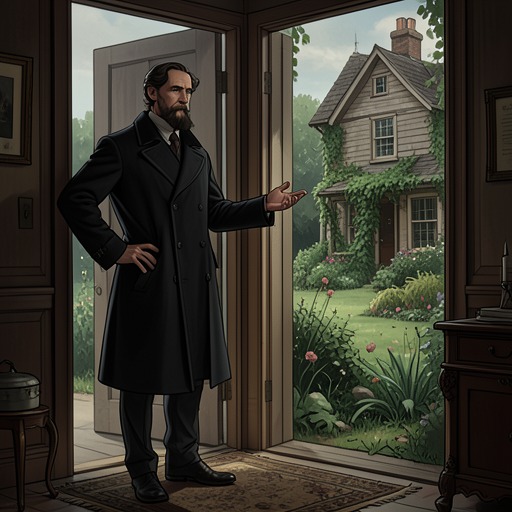
We Have Always Lived in the CastleJohn Blackwood is the deceased patriarch of the Blackwood family, whose authority and domestic ideals survive in memories of the family table and the final morning before the poisoning. The novel presents him indirectly, through recollections that establish his place in the household while leaving the exact circumstances of the family’s last quarrel uncertain.
Identity and Household Position
John was the head of the family and sat at the head of its large, round dining table, with the windows behind him and the decanter before him. Julian Blackwood recalls that John took pride in his table, his family, and his position in the world. The room had once represented a large and happy family, though Julian acknowledges that its members had disagreements and did not always see eye to eye.
John’s immediate family included his wife, Dorothy, his son, Thomas Blackwood, and his daughters, Constance Blackwood and Mary Katherine Blackwood. Julian describes Dorothy as delicate and recalls that she had joined her life to his; he remembers Thomas as ten years old and possessing some of John’s forceful traits. Mary Katherine was not at the table during the family dinner Julian reconstructs. These details make John’s authority tangible through the arrangement of people and objects around him, rather than through any present-day appearance.
The Last Quarrel and Morning
Julian remembers a hateful quarrel between John and Dorothy on the night before the poisoning. He heard Dorothy say that she would not stand for something, and John answer, “We have no choice.” Julian was listening at the door but came too late to hear what the dispute concerned; he supposes it was money, while making clear that this is speculation. Constance says her parents did not often quarrel. Julian distinguishes their usual civility from his own preference for shouting with his wife, leaving the final argument an unresolved break in the family’s ordinary manner.
The next morning, Constance was downstairs first, moving in the kitchen. Julian recalls hearing John come down after her, whistling, and thinking it was a fine, bright morning. As he retells the scene, he briefly says “my nephew,” then corrects himself: it was his brother, John, who had come downstairs. The stumble belongs to Julian’s faltering recollection; it also fixes John’s last morning in an ordinary domestic rhythm that none of the family recognized as their last.
Poisoning and the Table
John’s last known place is the family table, where Julian reconstructs the seating and recalls the household’s meal. Dorothy had arsenic on her blackberries. The account also dwells on the heavy silver sugar bowl, a family heirloom John prized. After the family members began dying, Constance took the bowl from the room, emptied and scrubbed it with boiling water before the doctor or police arrived. She explained that there had been a spider in it, an explanation she also gave to the police; Julian calls the washing a curious act. Another account emphasizes that Constance saw the family dying around her and did not call a doctor until it was too late. Together, these recollections place John among the victims of the household catastrophe without establishing that the scrubbed bowl itself was the source of the poison.
The Household’s Afterlife
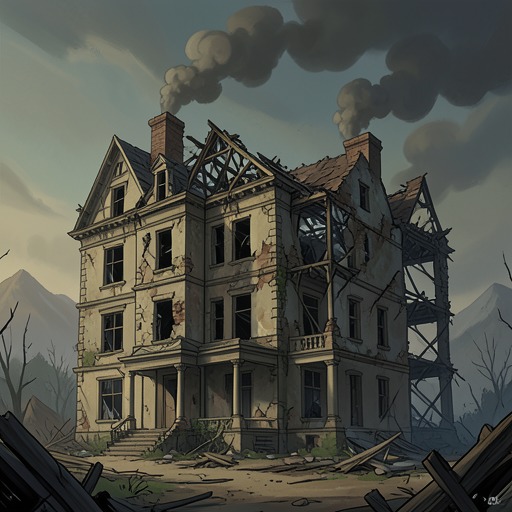
John’s presence continues through the order and inherited possessions of the Blackwood home. After the house is wrecked, the kitchen table is found turned on its side; generations-old silverware, dishes, and domestic linens have been scattered or damaged. The small rose-covered sugar bowl lies broken, distinct in the account from the heavy silver heirloom Julian says John prized. The surviving cellar preserves remain untouched, but the kitchen’s disorder makes the family’s former domestic order visible through its destruction. Later, ash still clings to vegetables gathered from the garden, linking the ruined home to a world far removed from the table at which John once presided.